
Research notes
GLP-1 in 2026: what nobody tells you about the weight-loss wave
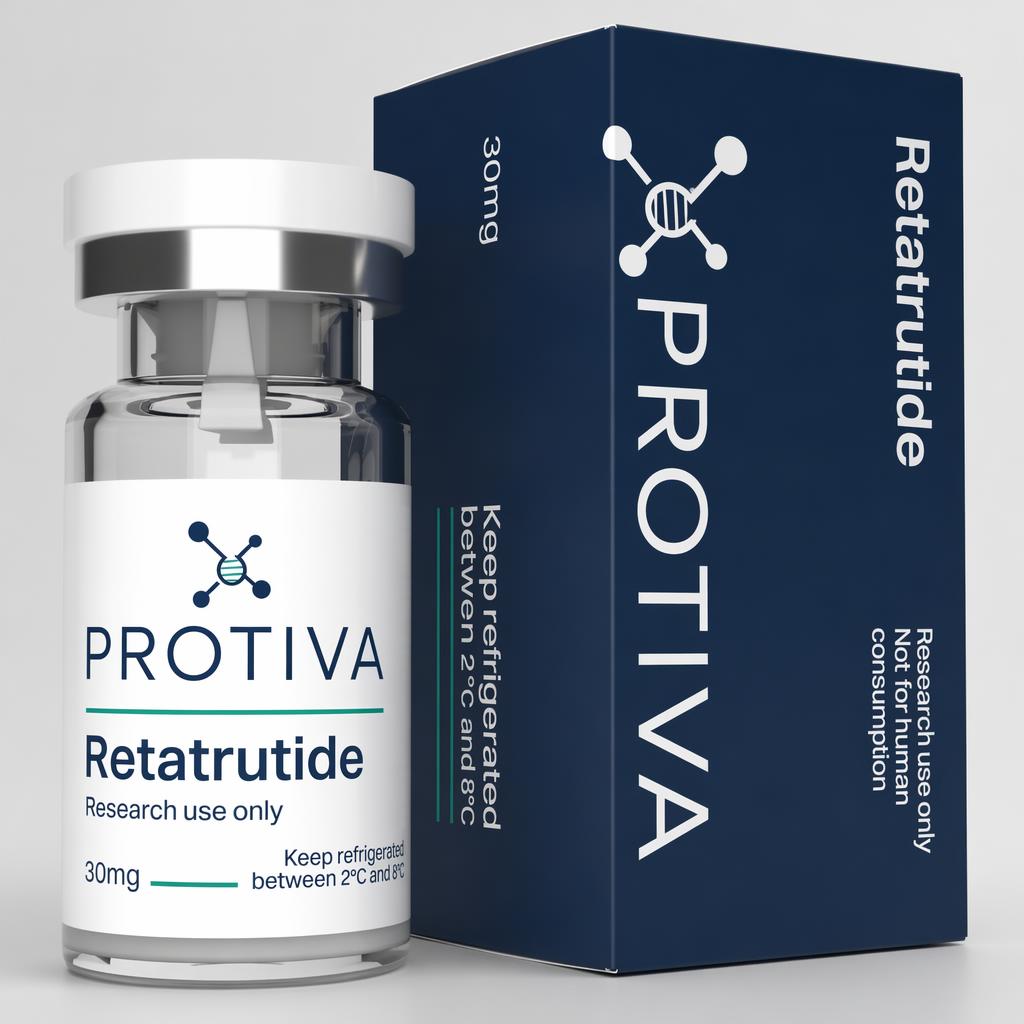
No category of research peptide has taken over the conversation quite like the metabolic one. "GLP-1" gets said as if everyone already agrees what it means — and then the discussion races past the actual molecule to the noise around it. Here is the plain-English version: why these compounds suddenly dominate, what they actually are, the two things the internet skips, and why the material behind the word matters far more than the word.
Key takeaways
- GLP-1 and GIP research peptides are a category of receptor-agonist molecules — a research context, not a single product or a promise.
- The surge in attention is a distribution and media story; the underlying biology has been studied for decades.
- Two things the internet skips: the "food-noise" idea and the rebound/maintenance question — both are topics researchers and clinicians discuss, not outcomes we claim.
- The category's popularity has pulled in a flood of grey-market vials — mislabelled, underdosed, or never independently tested.
- Four checks separate legitimate reference material from junk: HPLC purity, an independent per-batch COA, endotoxin testing, and proper cold-chain handling.
Why GLP-1 suddenly dominates the conversation
Very little about the underlying science changed overnight. What changed is distribution. A run of high-profile results, a wave of press, and an endless supply of social content turned a technical class of molecules into a household phrase almost overnight. The recommendation engines did the rest — the topic tested well, so more people saw it, so it spread further.
That is worth stating plainly, because it reframes everything that follows: a spike in attention is a story about reach, not about what is in any given vial. And a surge of demand is exactly the moment a lightly-policed market fills up with low-quality versions of whatever is trending — a point we return to at the end.
A trend tells you what is popular. It tells you nothing about what is inside the vial.
What these molecules actually are
Strip away the branding and the acronyms describe a mechanism. GLP-1 and GIP are incretins — signalling molecules the body already makes, involved in how it handles appetite signalling and blood-sugar regulation. The research peptides people talk about in this category are receptor agonists: molecules designed to engage those same receptors. Some target one receptor pathway; some are studied as dual GIP/GLP-1 agonists engaging two at once.
So "GLP-1" is not one substance any more than "engine" is one machine. It is a category of research compounds that share a receptor target and otherwise differ — different sequences, different properties, studied for different reasons. In this context they are research reference materials: compounds characterised in laboratory settings, not products to use on yourself. We name molecules by their generic research identity and category, and nothing here is a claim about what any of them will do for a person.
Keep that framing, because it is the antidote to most of the hype. The moment someone talks about "GLP-1" as a single miracle, they have told you they are selling a story rather than describing a class of molecules.
The two things the internet skips
Most content on this topic stops at the headline. Two ideas that come up constantly in research and clinical discussion almost never make it into the caption — and both are worth understanding, strictly as discussion of the molecules, not as advice or as outcomes we promise.
The "food-noise" idea
In research and clinical discussion, one recurring theme is the concept sometimes called "food noise" — the background chatter of appetite and food-related cues that the incretin pathways are involved in. Researchers discuss how engaging these receptors appears to quiet that signalling in study contexts. That is a description of what investigators talk about when they study the pathway — not a statement about you, not a result you should expect, and not a suggestion to do anything. It is a concept, hedged, offered so the rest of the conversation makes sense.
The rebound and maintenance question
The second theme the internet skips is what researchers and clinicians describe as the rebound or maintenance problem. In clinical discussion, a great deal of attention goes to what happens over the long term and after a research or treatment context ends — how changes are or aren't maintained. It is one of the most actively discussed open questions in the field. We raise it only to note that it exists and is debated; we make no claim about outcomes, offer no protocol, and give no guidance on use.
Notice what both descriptions have in common: each is framed as what the field discusses, hedged, with nothing guaranteed and nothing addressed to the reader. That is not us being evasive. It is the honest shape of an area still under active study.
The quality minefield nobody posts about
This is the part that actually matters, and the part the trend never mentions. Assume, for argument's sake, that everything interesting about this category holds up. None of it means anything if the material in front of you isn't what the label says.
Because these compounds sit in a lightly-policed corner of the market — and because demand is so intense — a surge in interest pulls in a lot of low-quality supply. In practice it shows up as grey-market vials with recurring problems:
- Mislabelling. What's in the vial isn't, or isn't only, what's printed on it — wrong compound, wrong concentration, or unlisted extras.
- Underdosing. The named compound is technically present, but far below what the label implies.
- No independent testing. Nobody outside the seller has verified the contents, so a purity figure is just a number someone typed.
- Careless handling. Sensitive material shipped and stored without a cold chain, so even a good batch degrades before it arrives.
The unifying theme: the story on the outside of the vial has nothing to do with what's inside it. And because most buyers can't test anything themselves, the junk survives on confidence alone. The only real defence is documentation — the next section.
You can't assess a vial by looking at it. You assess it by reading the paperwork behind it.
What separates legit from junk
If a source of research reference material can't satisfy all four, treat the rest of its marketing as noise:
- HPLC purity ≥99%. High-performance liquid chromatography is the standard method for measuring how pure a compound is. Research-grade material is typically quoted at 99% or higher — from an actual test, not a slogan.
- An independent, third-party COA — per batch. A Certificate of Analysis from an outside lab, tied to the specific batch in front of you. A self-issued or generic certificate is marketing, not verification.
- Endotoxin testing. Endotoxins are contaminants that can be present in poorly-made material. Serious suppliers test for them and can show the result.
- Proper cold-chain storage. Many peptides are sensitive and degrade if they aren't kept and shipped cold. Correct handling is the difference between a batch that arrives intact and one that's already spoiled.
Where that leaves you
With a working map, which is the whole aim. You now know that GLP-1 and GIP research peptides are a category of receptor-agonist molecules rather than a single miracle; that the surge is a distribution story, not a discovery; that the "food-noise" idea and the rebound question are things the field actively discusses rather than outcomes anyone can promise you; and that the single biggest variable is whether the material has been independently verified. That last part — purity and a per-batch COA — is the whole game, and it is the one thing the trend will never put in a caption.
Research-grade GIP/GLP-1 reference peptides
If you want to see what "research-grade, COA-backed" looks like in practice — GIP/GLP-1 reference peptides specified to ≥99% by HPLC, with an independent per-batch Certificate of Analysis in every box — that is the standard Protiva supplies to. The catalogue includes category examples such as retatrutide and tirzepatide. These are research reference materials for in-vitro laboratory use only; nothing here is a recommendation to use anything on yourself, and none of it is for human or veterinary use. The point is simply that the paperwork should exist before the purchase does.
Research use only
All Protiva products are supplied strictly for in-vitro laboratory research and development. They are not medicines, food, cosmetics or supplements, and are not intended for human or veterinary consumption, administration, clinical, diagnostic or therapeutic use. By purchasing, you confirm you are a qualified purchaser acquiring these materials solely for lawful scientific research. No therapeutic or health claims are made or implied.